A Tipsy Outrigger in Tahiti

Men in an Outrigger Canoe Headed for Shore (Arman Manookian ca 1929)
Around 1970, when I was three, my mother and I joined her parents in Tahiti. My grandfather loved Tahiti and had an intimate connection to the place. Naturally I don’t recall much of the trip besides sun, surf, and hot sand—and most of what I recall is likely memories of memories, things I have thought about periodically or been told over the years—but I do remember when my grandmother tried to kill me. Well, she always denied intending to, but that’s my version of this childhood trauma. Because the dear woman died a few years ago, the old witch will finally stop contradicting me.
A Teddy Bear with No Name
“And it is that word ‘hummy,’ my darlings, that marks the first place in The House at Pooh Corner at which Tonstant Weader fwowed up.”
—Dorothy Parker
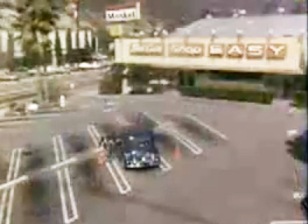
The Bel Air Shop Easy in Just You And Me, Kid
When I was ten, we lived across the street from the now departed Bel Air Shop Easy. It was an independent supermarket, nothing special but close by and pleasantly quirky. I spent a lot of time there killing time and knew half the employees. It figured prominently in the comedy Just You And Me, Kid, starring Brooke Shields and George Burns. (Even aged fourteen and co-starring with an octogenarian, Ms. Shields still manages to lose her clothes briefly.) The movie is fairly saccharine, not quite poisonous, but the kind of thing I avoid. On the other hand I have to disagree with Ms. Parker regarding Winnie the Pooh & Co. Perhaps it’s just my warped sense of humor, but what a wonderful den of anthropomorphized animals aching for therapy.
Epilepsy: The Lights Are On But No One Is Home
Most of what I know about epilepsy dates from my experience with my mother’s illness thirty years ago. It’s a bit dated. However, my experience describes a kind of epilepsy that is still obscure, and it aptly illustrates the extreme disruption epilepsy can cause. It’s not what most people would expect given typical assumptions. The story is also a parable of the difference outsiders can make by stepping into a situation that frightens off even the well-intentioned.

Types of seizure (from vanumu.com)
Epilepsy affects about 1% of the population, which amounts to several million people in the United States alone. Its stereotype is the grand mal1 or tonic-clonic seizure. This type of generalized seizure—and there are others, as shown in the diagram—is like a wave of abnormal electrical activity that rolls through the entire brain. The seizure leads to unconsciousness, muscles stiffening in the body (which resembles being “seized”), and then whole-body convulsions for a minute or two. Mercifully, the person is usually unharmed and does not remember anything.2 However, the witnesses will remember very well: The sight is frightening, especially the first time.




 Andrew Wells Douglass