Abner Kingman Douglass
Introduction
My grandfather Abner Kingman Douglass [Wikipedia], who went by Kingman, is the most interesting Douglass in my recent family tree. (I’ll write another time what I learned about my possible 9th great-grandfather Colonel John Douglass, who as a teen immigrated from Glasgow in Scotland to Charles County in Maryland circa 1651 to become a tobacco planter and enslaver.) I uncovered a fair number of documents regarding Kingman, though I never met him. I have more documents than I can reasonably post here; please use the contact form if interested in the 200+ MB archive.
A glamorous highlight of Kingman’s life and my focus here was his year flying in World War I. (Admittedly, as a pilot I am drawn to the aircraft!) Here is his well-known portrait, held in the National Archives. (A point of confusion: next to his embroidered aviator’s wings, he appears to be wearing a Distinguished Service Cross ribbon, described below, which he was not awarded until after the war.)
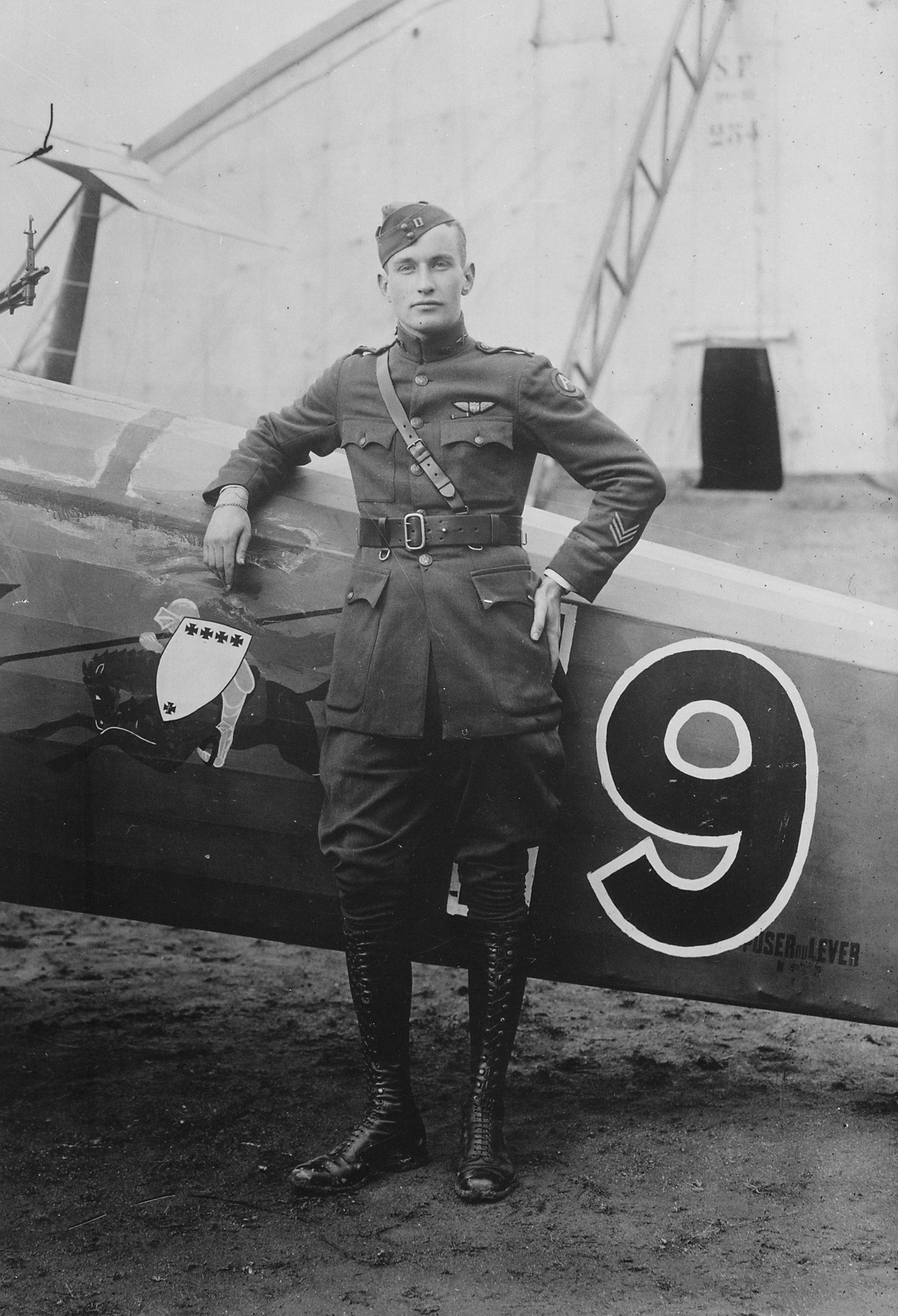 |
| “An American Pilot in France” (National Archives) (click photo to enlarge) |
Born April 16, 1896, Kingman was a student at Yale, possibly in his last year, when he demonstrated a certain wanderlust: his June 12, 1916, passport application submitted from New Haven stated his intention to engage in “charitable work” (with the “duties of citizenship”) on Dr. Grenfell’s expedition to Labrador, departing June 27, 1916. Dr. Grenfell was a medical missionary. I do not know whether he actually joined the expedition.
In June of 1917 he submitted a draft registration card stating he was born April 16, 1896, in Oak Park, Illinois, and that he was 5′ 7″ and 21 years old. He claimed a year’s experience in Artillery with the Connecticut National Guard. The card (below) also states he had light blue eyes, light hair, medium build, and was able-bodied.
The 91st Aero Squadron
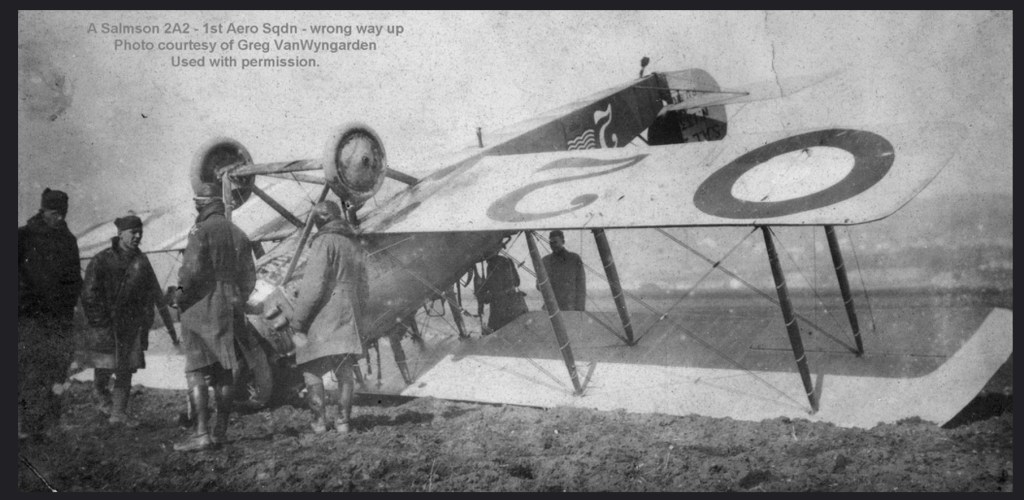
The 91st Aero Squadron was organized for reconnaisance on or about 21 August 1917. Because American aircraft innovation had lagged since the Wright Brothers, their primary aircraft was the French-made Salmson 2A2 [Wikipedia] (The Salmson had an unusual triple strut connecting the landing gear to the fuselage.) I do not know if Kingman had any flying experience prior to joining the Army Air Service.
Many of the experiences of the very fraternal “boys club” squadron are described in the book History of the 91st Aero Squadron, 1917-19 (click for full text; Kingman is mentioned several times as “Doug”).
I drew an ellipse on the squadron picture as my best guess for Kingman, mostly because of his prominent ears, the shape of his face, the embroidered pilot’s wings, and the cocking of his cap. Better guesses are welcome!:


Draft registration (click to enlarge)
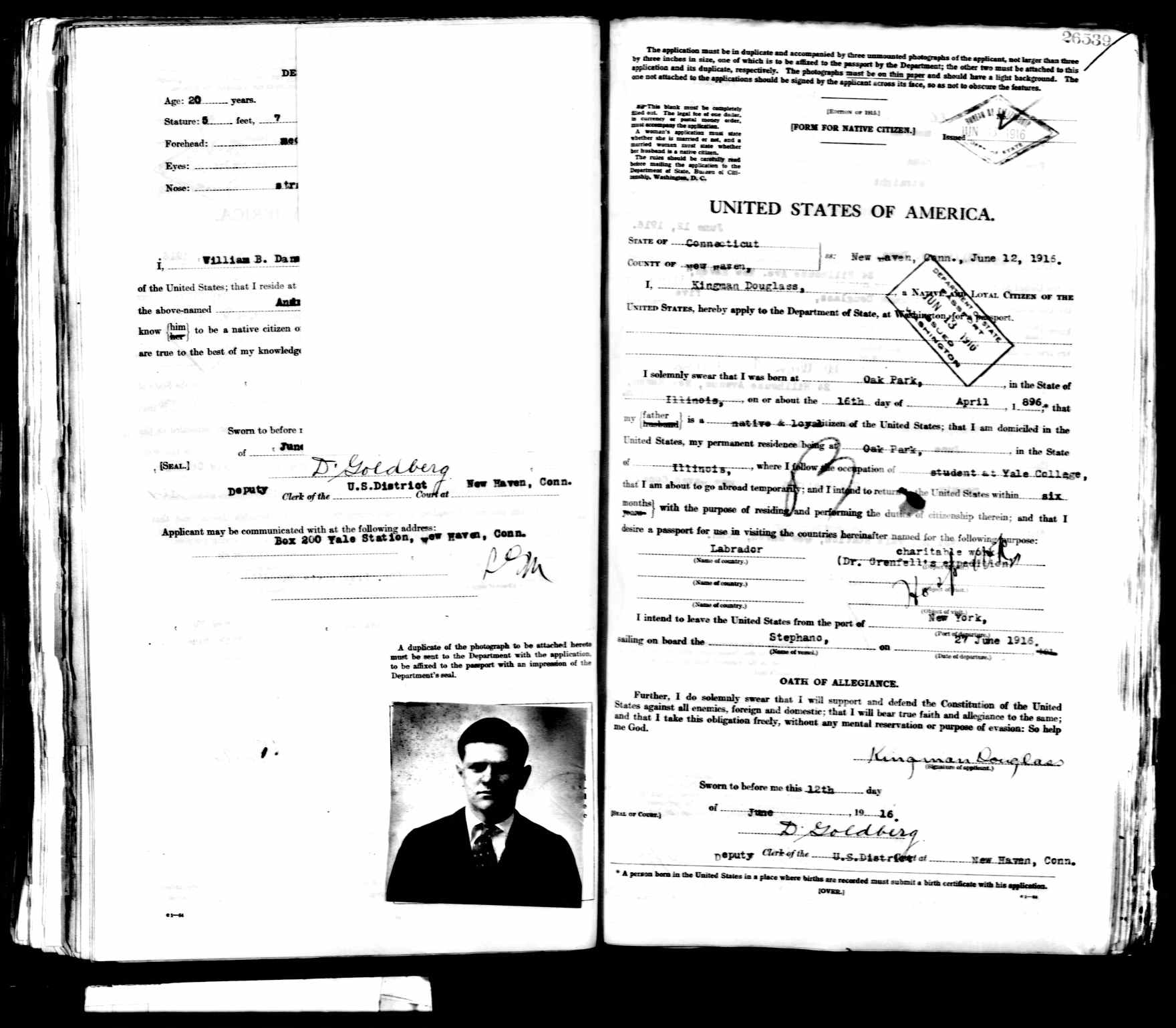
1916 passport application (click to enlarge)
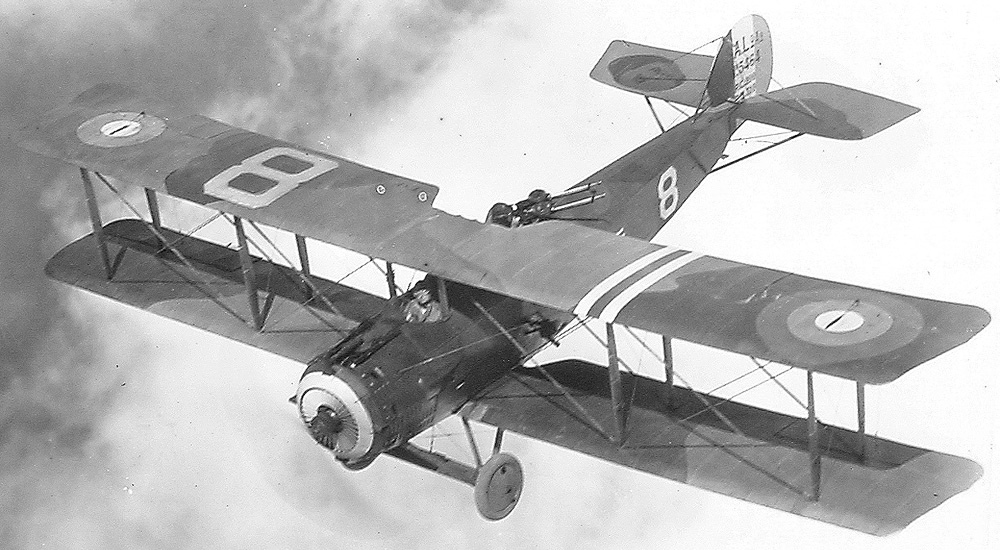
His 2A2 was #19, The Queen of the Air. The radial non-rotary engine developed 230 hp, about that of a small modern general aviation aircraft. Note the forward and aft machine guns; the pilot’s ability to fire safely through the propeller’s path was a recent innovation. It was difficult for the widely-spaced crewmen to communicate in flight.
Please watch: a silent film of the 91st Aero squadron in action.
Some more pictures of Salmson 2A2s:
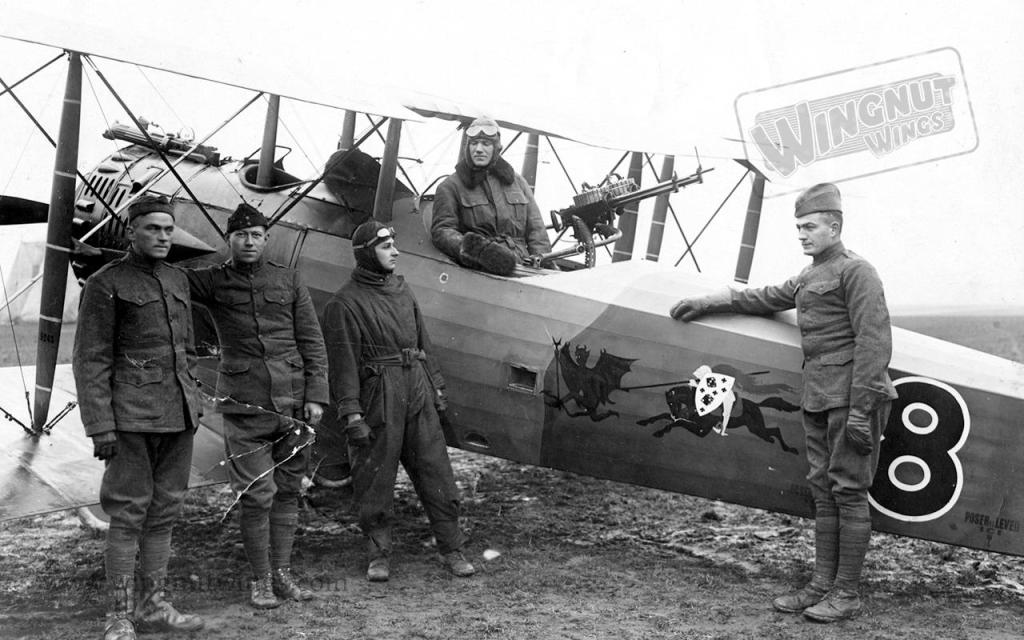
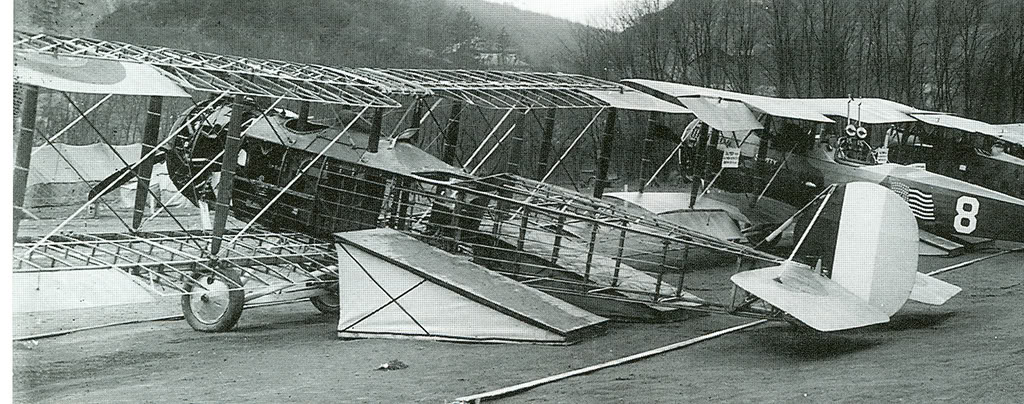
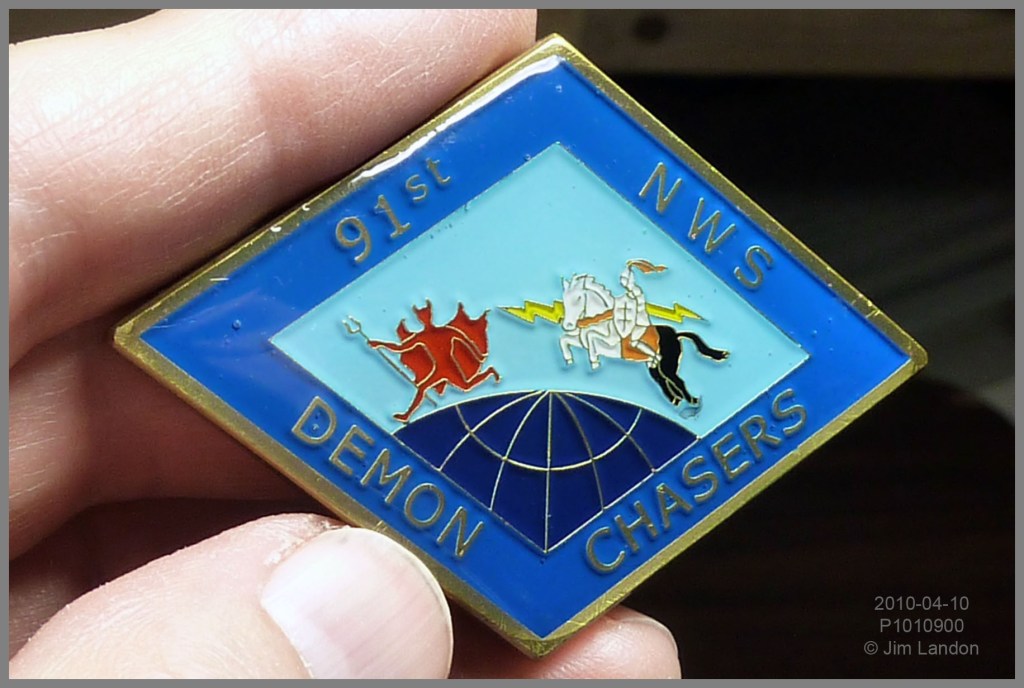
The original “Demon Chasers” art, and the insignia of the modern reconstituted 91st Cyberspace Operations Squadron, an electronic cyber warfare unit.

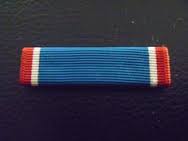
Distinguished Service Cross
Lieutenant Kingman Douglass and his Harvard-educated gunner/observer were decorated in 1919 with the Distinguished Service Cross (DSC), the nation’s second-highest military honor, for “heroism in action.” The citation states that on October 31, 1918—less than two weeks before the armistice—Kingman shot down one enemy aircraft and damaged another on a photographic observation mission near Longuyon, France. Overall, he was credited with three aerial victories, and his gunner with five.
Family lore is that the original decorations were lost in a hotel burglary. Here are a generic WWI distinguished service cross ribbon and embroidered pilot’s wings. If you look carefully they are visible on Kingman in some of the photographs, as well as his lieutenant’s bars. He was promoted to captain at the end of the war.


World War II
I have found little documentation of his service in WW II as a tactical bombardment planner—target selection based on intelligence information such as aerial photos—in the European theater and, in the last months of the war, Pacific theater where he was chief of the Allied intelligence section group.
During World War II, Kingman returned to the U.S. Army Air Corps service and was involved in interpreting aerial reconnaissance and planning bombings. At Bletchley Park, he was privy to ULTRA, the allied code name for secretly broken enemy encrypted signal intelligence. After the Allied victory in Europe, he was transferred to the Allied Intelligence Group in the Pacific Theater, which in turn led to postwar work in setting up the CIA as an Assistant Director. He left the military with the rank of colonel.
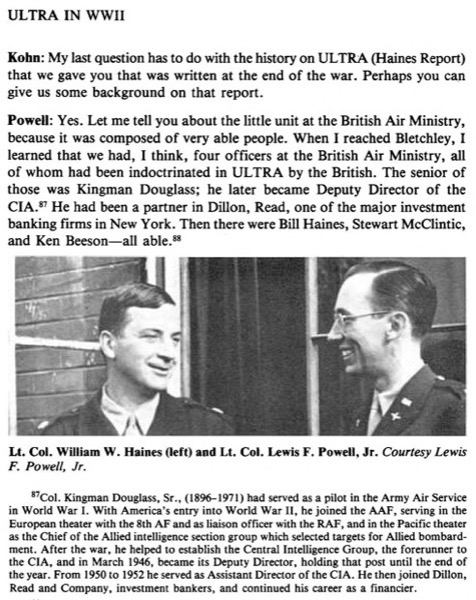
I would like to locate information on his role during and after both wars and would be grateful if someone would undertake finding any declassified ones; normally documents are declassified after a certain amount of time, and it has been almost 80 years. My cousin speculates that he was involved in planning the atomic bombings of Japan. I have no documentation of his involvement in that highly politicized decision, or any other bombing campaign. Documentation would be of interest regardless, especially as the final phase of bombing of Japan had degenerated into indiscriminate high-altitude area firebombing, sometimes termed terror bombing.
:
 Kingman’s 1952 resignation from the CIA
Kingman’s second wife, Adele Astaire, pictured in a 1961 Life Magazine article at their “Mount Gordon” estate in Middleburg, Virginia (purchased in 1951):
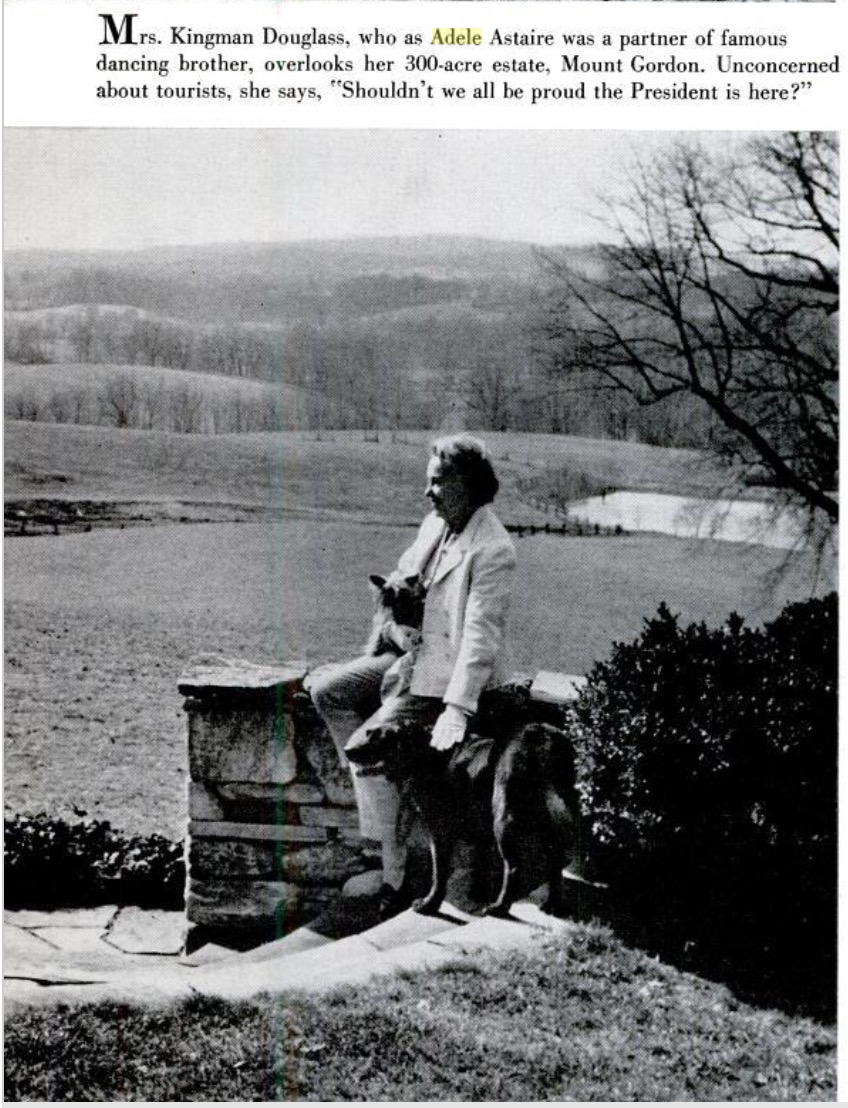
In 1946, after World War II, Kingman “influenced the development of the Central Intelligence Agency.” He served for most of 1946 as the CIA’s Acting Deputy Director, and 1950-52 as its Assistant Director.
Kingman died October 8, 1971, aged 75. His New York Times obituary:





 Andrew Wells Douglass

You must be logged in to post a comment.